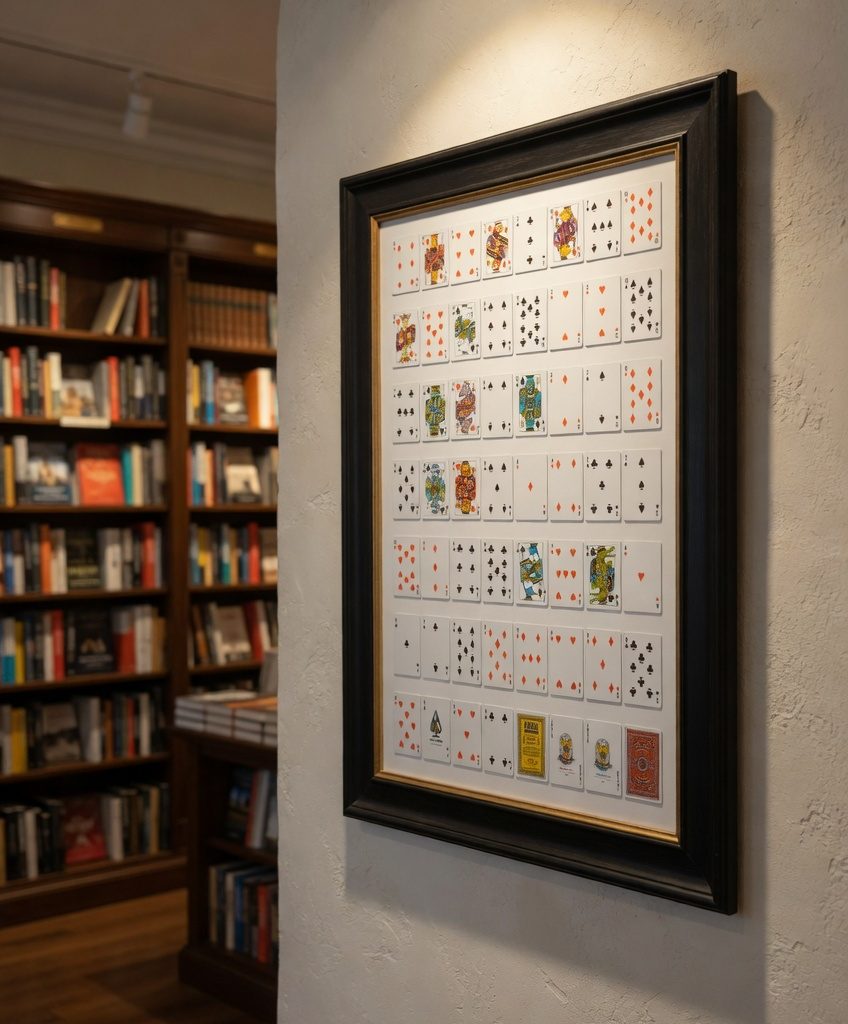
People sometimes assume that because the shuffle is random the rest of the process is loose. It isn’t. I pick the deck carefully. Premium stock holds up better under glue and stays flatter on the rigid board. I shuffle properly and film it. Then the asembly takes hours. Every card is placed by hand. The certificate lists the exact sequence so the piece can be verified later.
No prints exist. I decided early on that the whole point collapses if I start making copies. Each board is 59.4 × 84.1 cm, framed, and finishe so it can hang without further work. That size works in both domestic and gallery spaces, which matters when you’re talking to people who show emerging artists alongside more established ones.
Commissions happen occasionally — someone sends a personal deck and I treat it the same way. For those I can sleeve the cards first if they want the option to reverse the piece later. Most of the time the work stays as it is.
From a practical point of view this makes the work straightforward for galleries to handle. One object, clear documentation, no edition questions, and a process I can explain in a few minutes. London has enough artists producing interesting things. The ones who cna also talk clearly about what they do and why it only exists once tend to stay on people’s lists longer.
I’m still in the studio most days doing the same sequence. Shuffle, record, assemble, check. The next board will be different from the last one. Thats the only guarantee I can give.