Fair week in London always feels louder than the rest of the year. I went to a couple of the smaller presentations rather than the main tents. One gallery had a run of works that all used found packaging. Another showed drawings that were almost too delicate to photograph. Both were interesting. Neither looked anything like card assemblages.
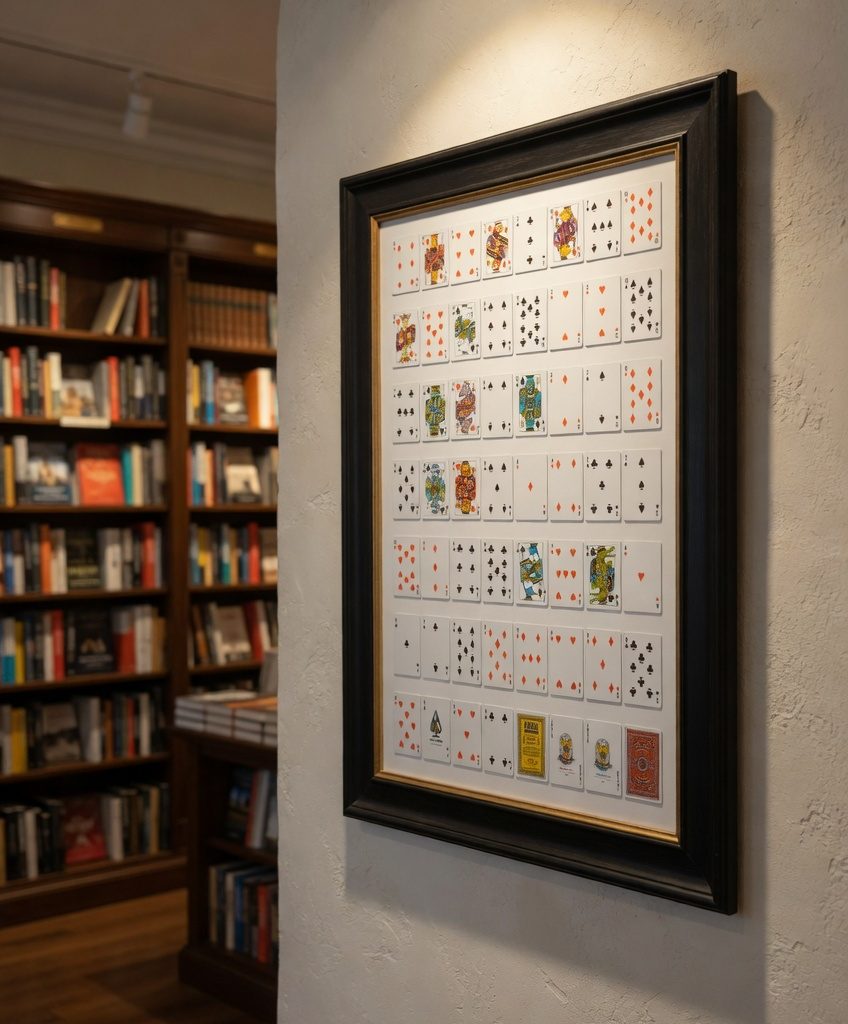
I keep noticing how rarely the everyday object stays everyday once it enters the work. Most artists transform the material until you have to be told what it was. With the boards the cards are still obviously cards. You can read the pips if you stand close. The shuffle order is the only thing that has been decided for them. Everything else — the suits, the faces, the slight wear on some of the older decks — is just what arrived in the packet.
That directness seems to be what some gallerists respond to when they are tired of work that needs a long wall text. The concept is simple enough to say in one sentence: one unrepeatable order, fixed. The object does the rest. I don’t add extra layers on top of the cards unless the deck itself suggests it (the green wash behind the Wicked pieces, for example). Most of the time the board stays relatively plain so the arrangement can be read.
After the fairs I came back to the studio and shuffled another deck. Same process. The result looked nothing like the one before it. Thats still the part I like most.