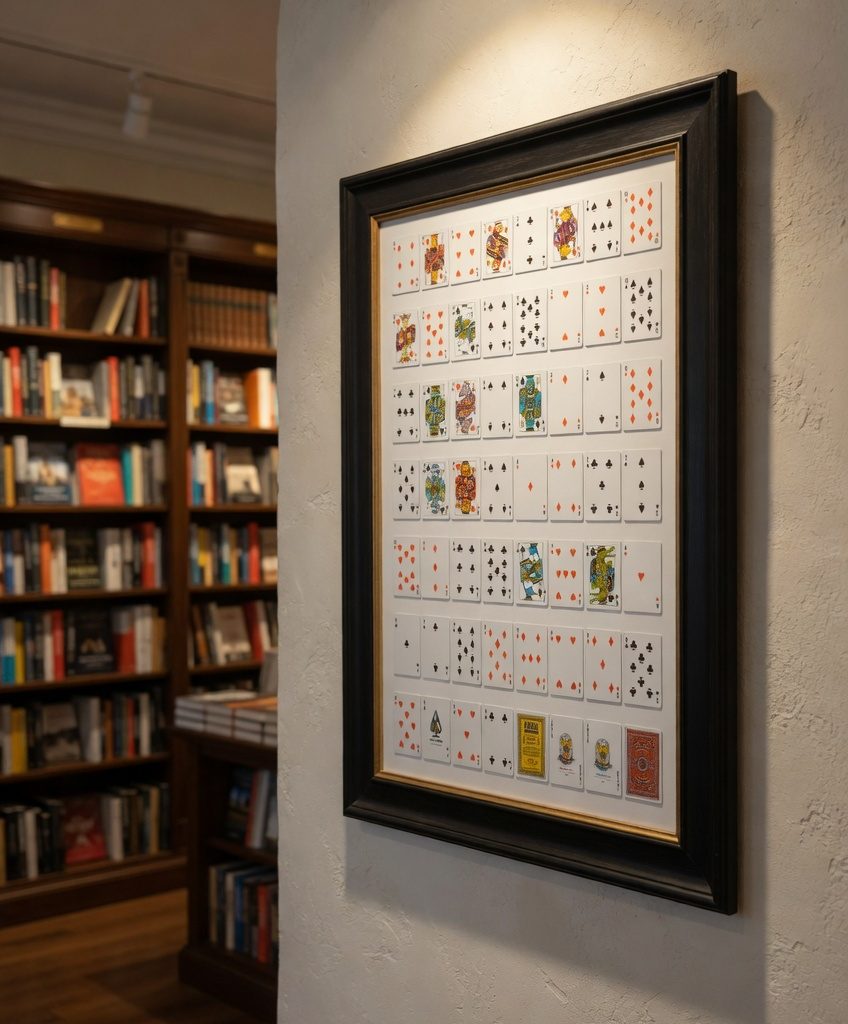
Photos of the boards travel further than the boards themselves. I post them, people see them on Saatchi or Singulart, sometimes a curator messages from the other side of London. The photos are useful but they flatten things. The real surface has small shadows between the cards and a slight give when you press near the edge. None of that survives on a screen.
I try not to over-edit the images. If a card corner is a fraction higher than the ones next to it, I leave it. If the light in the West London studio makes one suit look warmer, I don’t correct it. The point of the work is that it was assembled by hand from a real shuffle. Cleaning the photo until it looks perfect starts to argue with that.
People who have only seen the work online sometimes arrive expecting something smoother. They usually adjust once they are in the room. The ones who already work with galleries tend to ask fewer questions about the finish and more about whether the documentation is consistent across the series. It is. Same board size, same method, same refusal to make prints.
I still prefer showing the pieces in person when I can. The online version gets the conversation started. The studio is where it becomes clear what the object actually is.