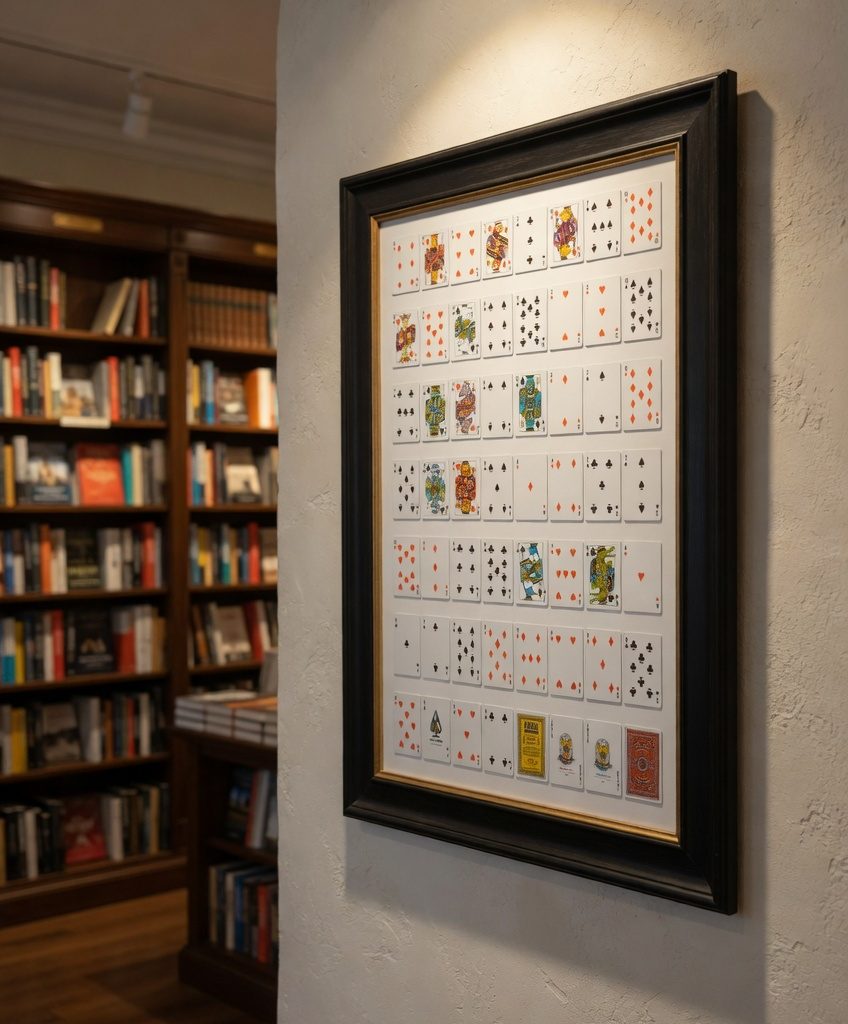
No, I don’t rearrange them. Once the shuffle is done and recorded, that order is the one that goes on the board. I don’t pull cards out, swap them, or tidy up clusters that look awkward. If a run of the same suit lands together or the face cards bunch up in one corner, it stays.
The only small adjustment I sometimes make is where the sequence starts on the board. The cards are laid out in rows, so shifting the starting point by a few places can mean a strong run (a four of a kind, for example) sits together instead of being split across the edge. The order itself doesn’t change. Its still the same shuffle, just framed differently so the sequence can be read more clearly. I don’t do this on every piece. Only when it makes the existing order easier to see.
People sometimes assume I must be composing the final look, because some of the boards end up with quite strong visual balance. Most of the time that balance is accidental. The mathematics of a proper shuffle means certain patterns appear more often than pure chaos, but I don’t chase them. I just fix what came out.
When someone visits the studio they can usually tell. The videos show the cards moving, then the finished board matches that order exactly. Curators who have looked at the work tend to check this early. They want to know the claim about chance is literal rather than a starting point I then edit. It is literal. The assembly is careful, but the decisions stop at the shuffle.
Thats why some pieces feel tighter than others. I don’t correct the looser ones. They are part of the same series.