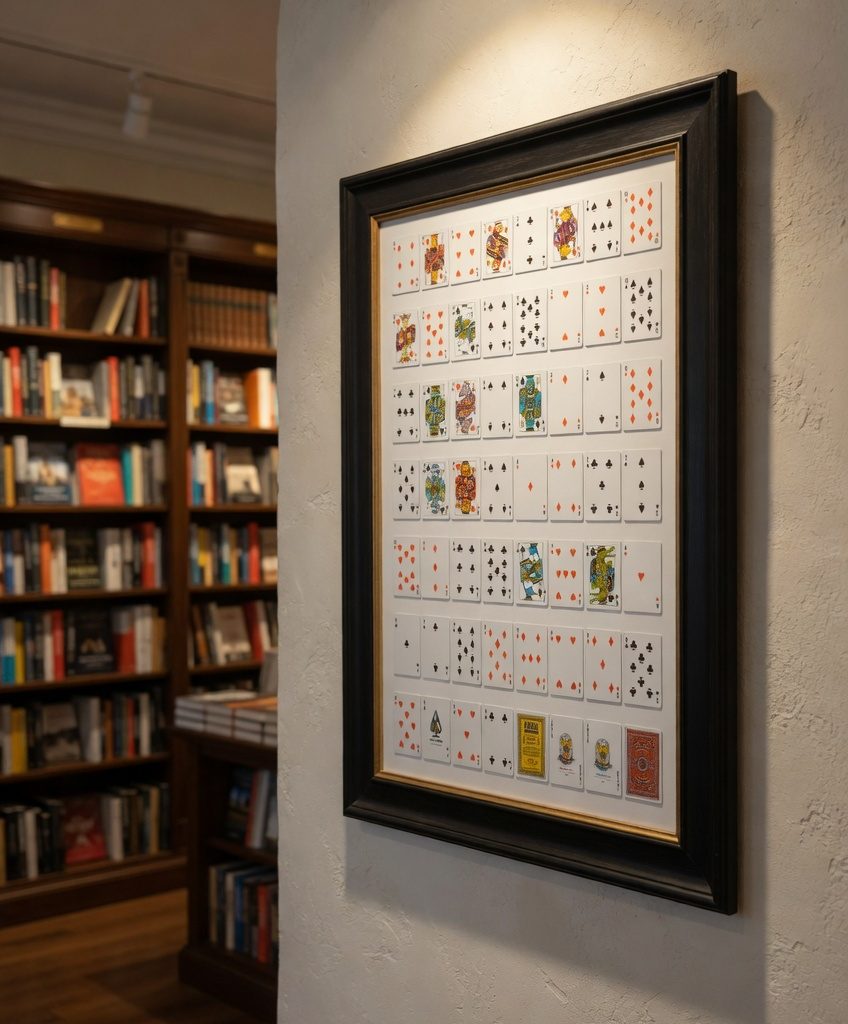
I did a short open studio stretch a while back. Not a big organised one, just a few afternoons where people who had seen the work online could come through West London and look properly. Most visitors walked past the boards at first, then came back. The ones who stayed longest were usually the ones who asked about the shuffle rather than the finished look.
One person stood in front of a black-and-silver piece for ages counting the face cards that had landed near each other. Another wanted to know if the glue was reversible. (For commissions it can be, if we sleeve the cards first. For the regular series it isn’t.) A couple of people who work with galleries asked whether the process was documented. I showed them the phone videos. Nothing fancy, just the cards moving and the final order being fixed.
London has plenty of open studios where the work looks finished and the artist has a short speech ready. Mine is more awkward. I end up talking about how long the assembly takes and how some decks fight you more than others. The Bourbon ones are thick. The neon cyber ones show every fingerprint if you aren’t careful. People seem to like hearing the small problems. It makes the finished board feel less mysterious and more like something that actually got made in a room.
If you’re a curator who prefers to see the work before deciding whether it fits a show, the studio is still here. The boards don’t change once they’re done. You can look as long as you want.