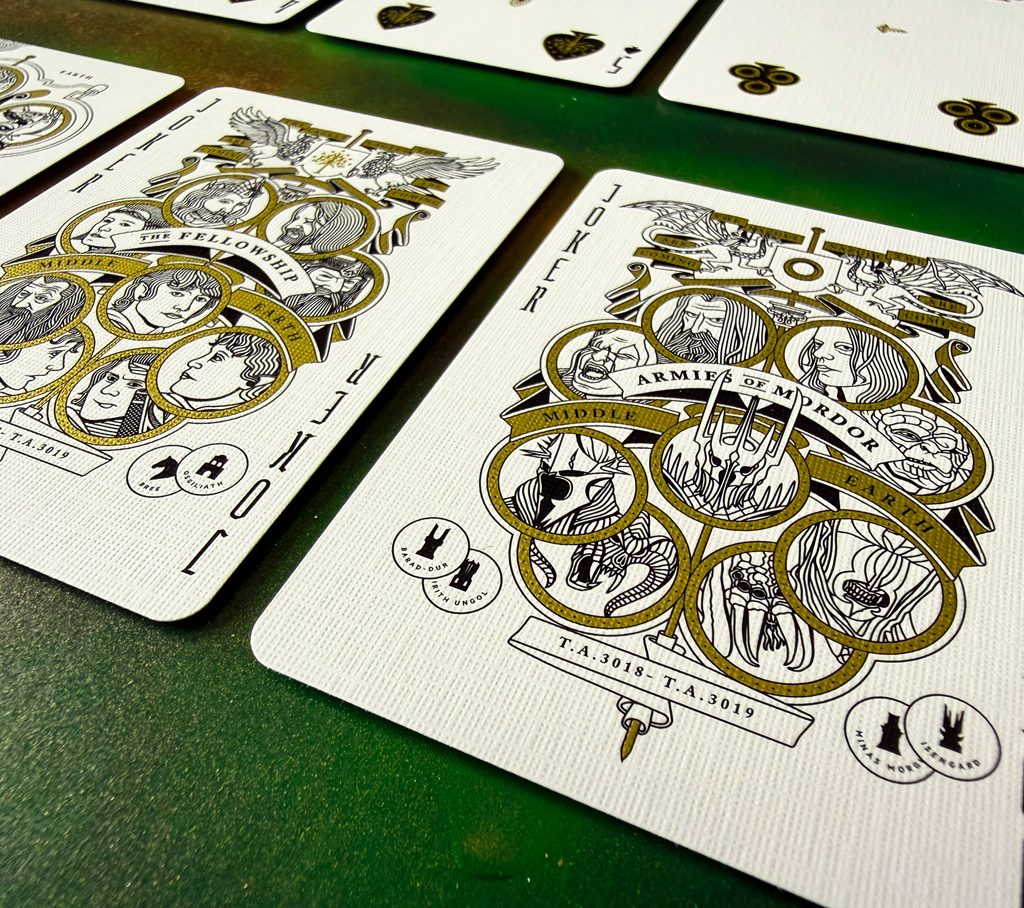
A shuffled deck looks ordinary. Fifty-two cards. A few seconds of movement. The result feels familiar because we have seen cards all our lives. The mathematics behind that result is not familiar at all.
The number of ways to order a standard deck is written as 52! — fifty-two factorial. That means:
52×51×50×49×⋯×2×1
The answer is about 8.07×1067. Written out, it is an 68-digit number. It is not “52 possible layouts.” It is more possible layouts than the mind can hold.
Comparisons that make the scale visible
- There are roughly 1018 to 1019 grains of sand on Earth. A shuffled deck has vastly more possible orders than there are grains of sand.
- The universe is about 13.8 billion years old. That is roughly 4×10¹⁷ seconds. If you had started shuffling at the Big Bang and produced a new order every second, you would still have barely begun.
- If every person alive today shuffled a deck once per second, and kept doing so for the entire age of the universe, the group would still not come close to listing every possible order.
- There are more ways to arrange 52 cards than there are atoms in the Earth. There are fewer ways than there are atoms in the observable universe — but only because the universe is unimaginably large, not because a deck is small.
This is why a thorough shuffle is treated here as a conceptual event, not a studio trick. The deck does not contain a hidden design waiting to be revealed. It contains almost every design at once. The artwork keeps only one.
What “unique” actually means
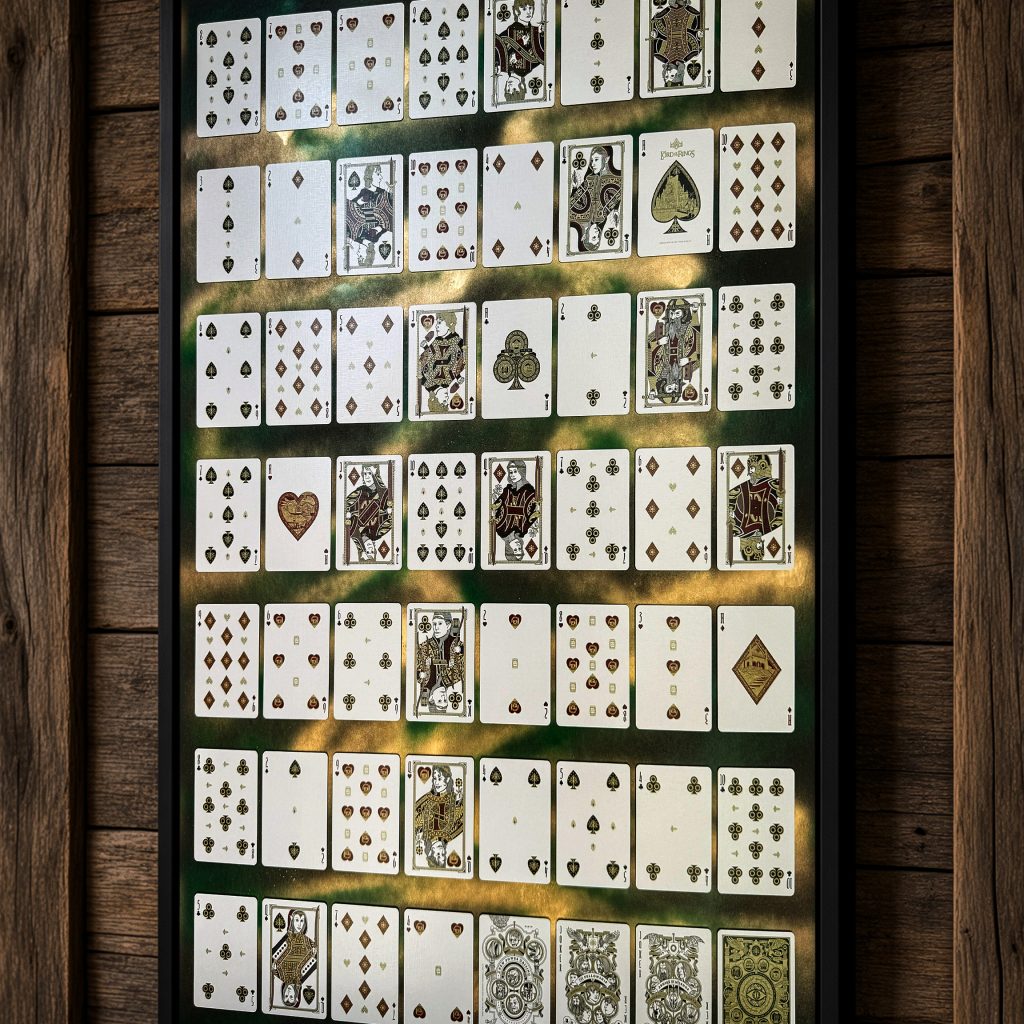
Two decks of the same edition can look similar from across a room. Up close, the sequence is the difference. Four aces in a row, a run of one suit, a quiet stretch of mixed ranks — these are not planned compositions. They are outcomes. If the same cards were shuffled again, the wall would hold a different work.
That is the point of recording the shuffle and assembling the cards in the order they fall. The piece is not a picture of chance. It is a piece made from chance. The comparisons above are not decoration. They are the reason the same result will not return.
The finished mosaic is one number in a set too large to finish counting. That is what hangs on the wall.